A studbook is a closed registry before it is a breed
The moment a breed committee votes to admit no more outside blood, a biological population becomes an administrative category — and the arithmetic of the founding generation runs forward from there.
The document comes first
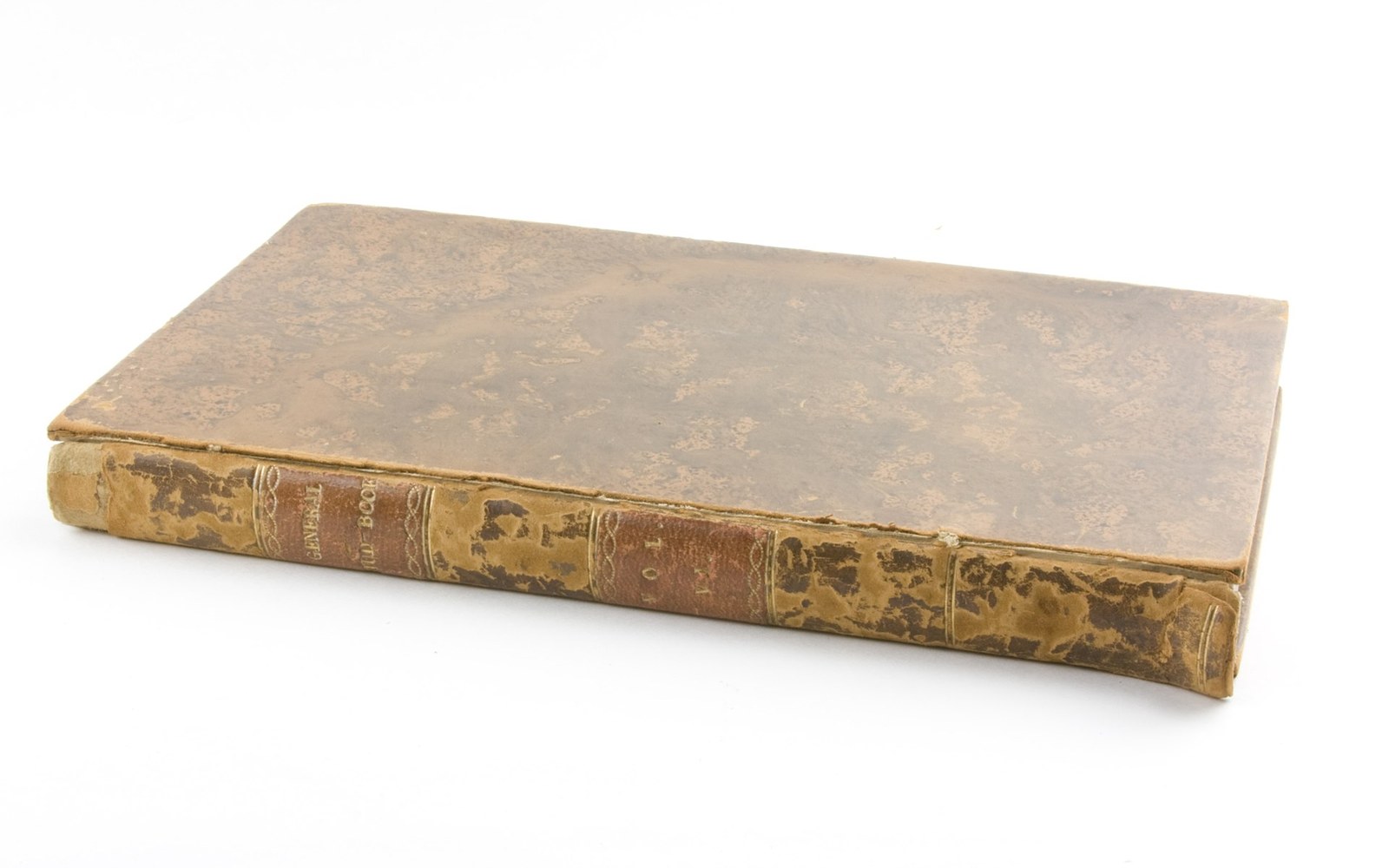
Horsemen speak of breeds as though they were facts of nature, stable and self-evident, but every breed is founded on a document. The Thoroughbred's stud book, first published by James Weatherby in 1791 as the General Stud Book, records the mares and stallions from which all subsequent Thoroughbreds must descend in unbroken line. The Arabian Horse Association's studbook traces to a founding population assembled largely in the nineteenth century from desert-bred stock imported to Europe and North America. The Hanoverian Verband, based in Verden an der Aller, maintains a registry whose roots go back to the eighteenth century but whose present closed character hardened incrementally through the twentieth. In each case, the foundational act was not the identification of some pure population already existing in the wild — it was a decision, made by people sitting at a table, to draw a line and say: after this date, descent from registered stock is the only qualification that counts.
The word studbook is almost always used loosely, as a synonym for pedigree record, but technically it describes the register that gives a breed its legal and institutional shape. Open studbooks admit outside stock — graded mares, approved stallions from other registries — on the basis of conformation and performance. Closed registries do not. The General Stud Book has been effectively closed to new foundation stock since around 1900, with only minor exceptions handled by the Jersey Act of 1913 and its subsequent reversal in 1949; the details vary by jurisdiction, but the principle is constant. Once the register closes, the founding population is fixed, and every animal born thereafter inherits some portion of the founders' limited gene pool.

What the closure actually does
Closing a registry is a genetic bottleneck by design. The founding animals are, collectively, the entire reservoir of genetic variation the breed will ever draw on — barring mutation, which is slow, and the rare formal exception, which breed committees resist fiercely. Geneticists express the cumulative effect as the inbreeding coefficient, a number representing the probability that any two alleles at a given locus in a single animal are identical by descent. In a large, open population the coefficient trends toward zero. In a closed registry built on a small number of founders, it trends upward with every generation, and the rate of increase is a function of effective population size rather than raw census numbers, because only reproducing animals count.
The Thoroughbred is the most studied case. Research published through institutions including the University of Cambridge's genetics group has documented a declining effective population size over the past two centuries, concentrated further by the commercial premium placed on speed and by the dominance of a small number of sire lines. The Northern Dancer line and its descendants now account for a large proportion of pedigrees worldwide; the consequence is that nominally unrelated horses in a Tattersalls sale ring at Newmarket may share a surprisingly high proportion of their genome by descent. This is not a flaw in the system as breed registries understand it — it is the system. A closed registry is a machine for concentrating traits, and concentration is indistinguishable, genetically, from reduction of variation.
The National Stud at Newmarket has stood stallions whose pedigrees illustrate the pattern across decades: lines converge, coefficients accumulate, and the animals that result are extraordinarily consistent in type precisely because the founding variation has been progressively narrowed. The same logic applies in miniature to newer or smaller breeds. The Friesian, administered by the Koninklijke Vereniging Het Friesch Paarden-Stamboek — the Royal Association of the Friesian Horse Studbook — derives from a founding population that contracted severely in the early twentieth century when crossbreeding to improve size nearly eliminated the original type. The recovery was accomplished by selecting from whatever purebred animals remained, which means the modern Friesian carries an elevated inbreeding coefficient relative to what existed before the bottleneck. The breed's present uniformity and its health vulnerabilities are two faces of the same administrative history.
The registry as institution
A studbook is not merely a list of animals. It is an institution with its own bureaucracy, inspection protocols, licensing apparatus and, in the case of the Thoroughbred, a global interlocking network of national stud books that recognise each other's records. The International Stud Book Committee, which convenes periodically, sets the standards by which national Thoroughbred registries certify that an animal's pedigree is traceable without break to recognised foundation stock. What a catalogue entry actually states in a sale document rests entirely on this chain of institutional recognition: the pedigree lines printed there are underwritten by the studbook's records, not by the animal in the ring.
Identification has become the mechanism that makes the registry enforceable in practice. The transition from written description to blood typing to DNA profiling has tightened the link between the paper record and the specific animal. A microchip number, a DNA profile held on file, a passport issued by the relevant authority — these are the physical tokens of what is, at root, an administrative claim. The studbook says this animal descends from those founders; the passport and the chip say this animal is the one the studbook describes.
For warmblood registries, the structure is more complex still. Many European warmblood studbooks operate on a population-improvement model rather than a strict closed-registry model: approved stallions from other warmblood registries can contribute to the gene pool, and the mare-licensing process includes performance testing as well as conformation inspection. The Hanoverian, the Oldenburg, the Danish Warmblood and the KWPN — Koninklijk Warmbloed Paardenstamboek Nederland, the Royal Dutch Warmblood Studbook — each maintains its own registry while cross-recognising approved stallions from affiliated books. The result is something between an open and a closed system: the registry is selective rather than strictly ancestral, and breed identity is maintained by inspection standards and approved-list decisions rather than by an absolute ban on outside blood.
What all of these systems share is the founding act: at some point, a committee decided what counted and what did not. The animals that fell inside that decision became founders; the animals outside it became irrelevant to the breed's future, however much they may have contributed to its past. The Thoroughbred's Arabian and Barb roots are celebrated in breed mythology, but no modern Arabian or Barb can add to the Thoroughbred's studbook, because the line was drawn long ago and the institution enforces it.
A breed, then, is what survives the paperwork. The animals exist prior to the document — populations of horses have always varied and been selectively bred — but the breed, as a legal and commercial entity, does not exist until someone decides to write it down, close the list, and defend the boundary. Everything that follows — the type, the coefficient, the price differential at auction, the health pattern across generations — follows from that administrative moment, which is rarely celebrated and almost never reversed.
Read next
- Founding stock, and the coefficientClosed registries publish inbreeding coefficients, and the arithmetic of a small founding population is unavoidable.
- The passport and the chipIdentification is administrative infrastructure, and it is what makes a registry enforceable.
 Built to see almost everythingBuilt to see almost everything, except straight aheadMonocular vision on each side and a blind spot directly in front explain most of what gets read as temperament.