Why the farrier's trade exists at all
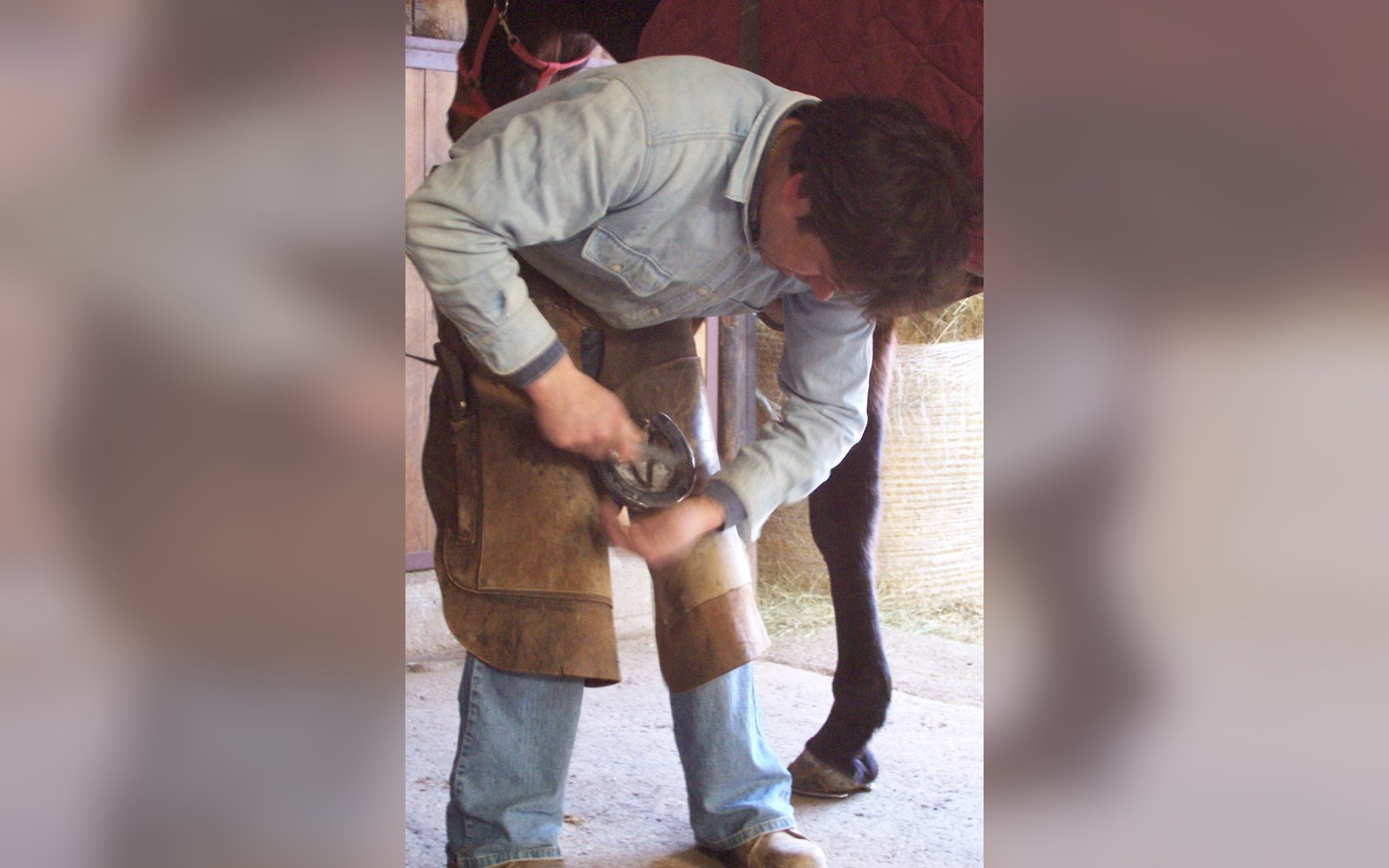
A domesticated horse on hard ground wears its horn faster than it grows. The farrier is the solution to that single, durable problem — and the trade that grew around it is more technical than it first looks.
The problem is in the biology
A horse's hoof is not a solid structure. It is a complex capsule of keratinised horn, grown continuously downward from the coronary band — the ring of soft tissue that runs around the top of the hoof like a collar. On soft ground and at the movement distances a feral horse naturally covers, growth and wear tend toward balance. Domestication broke that balance in two directions at once: it put horses on stone streets, packed-earth yards and gravel tracks while also limiting the ranging movement that would have distributed wear evenly. The horn at the toe wears faster than the horn at the heel, or it does not wear fast enough and the foot grows long and distorted. Either way, the capsule fails to maintain its correct geometry, and the structures inside — the pedal bone, the navicular bone, the deep digital flexor tendon — begin to carry load at wrong angles.
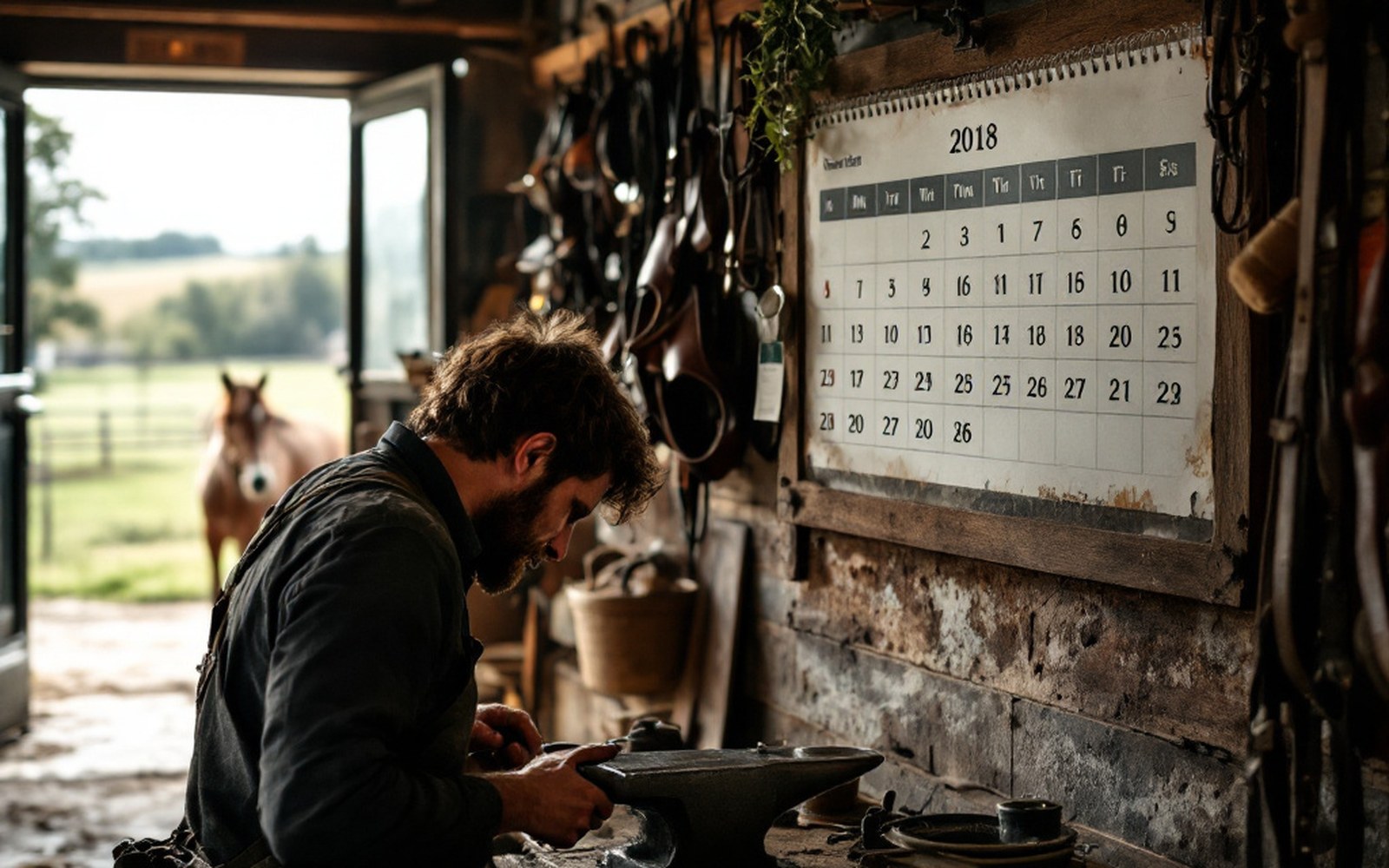
The shoe is not decoration. It is a wear surface interposed between horn and ground, bought in metal because metal outlasts horn by a ratio the horse's biology cannot match. A steel shoe, properly fitted and nailed, takes the abrasion. The horn beneath it grows undisturbed for the five or six weeks until the shoe has moved down the foot far enough, and the foot grown long enough, that both must be reset. That interval — growth rate setting the calendar — is the rhythm the whole trade runs to.
What the farrier actually does
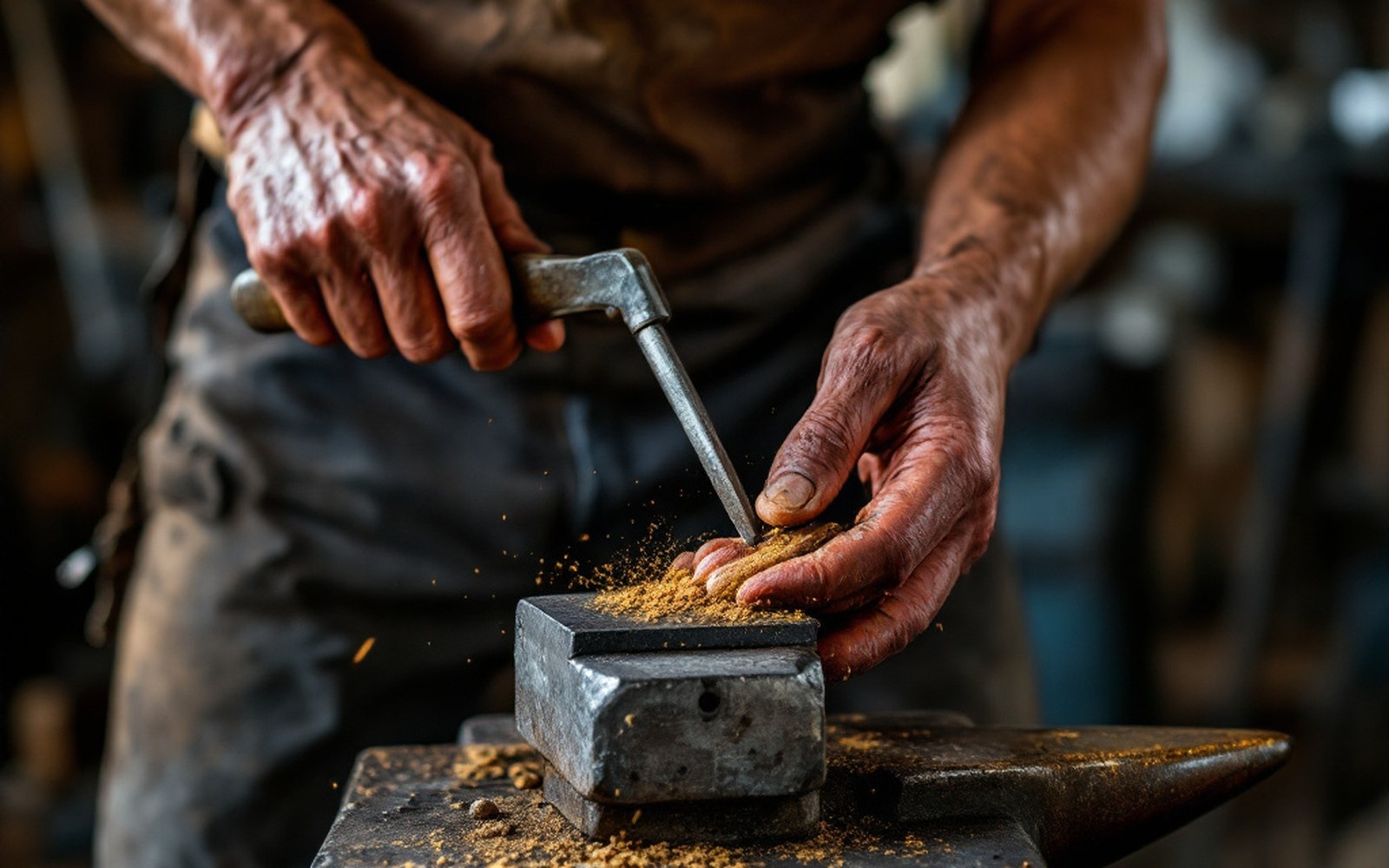
The farrier removes the old shoe with pincers, reads the foot, and takes horn off with a drawing knife and rasp until the sole is level and the weight-bearing surface of the wall sits at the correct angle to the pastern above it. This is skilled anatomical reading, done by eye and touch against a standard that varies breed to breed and individual to individual. A draught horse carries a wider, flatter foot than a Thoroughbred. A horse with a long toe and low heel needs a different correction from one with contracted heels. The farrier must know the difference, and must know where the correction stops — because taking too much horn away exposes the sensitive laminae beneath and lames the animal immediately.
Hot shoeing is where the trade diverges from simple metalwork. The farrier shapes a steel blank at a forge, hammering it on an anvil to match the contour of the prepared foot precisely. The hot shoe is then held briefly against the horn — not to burn through it, but to scorch the surface just enough that the contact pattern becomes visible: a dark, even ring shows a flat bearing surface; a patchy burn reveals a high spot that needs more rasp work. The shoe goes back to the forge or the water bucket, and the process iterates until the fit is true. Then the shoe is cooled, positioned, and nailed through the white line — the junction of the inner and outer horn — so that the nail exits through the wall, is twisted off, and the protruding stub is hammered flat to form the clench that locks the shoe in place. Eight nails, driven at precise angles, none of them entering the sensitive inner foot: the margin for error is a few millimetres.
Cold shoeing — fitting a pre-shaped or factory shoe without a forge — is faster and adequate for many working horses on light going. Hot shoeing allows a precision that cold fitting cannot match, and it is the standard the Farriers Registration Council — the statutory body that has regulated the trade in Great Britain since the Farriers (Registration) Act 1975 — expects of a registered farrier.
Why the apprenticeship is long
Becoming a registered farrier in Great Britain takes four years. The apprentice — an Apprentice Farrier working toward the Diploma of the Worshipful Company of Farriers — spends that time with an Approved Training Farrier, working real horses in real conditions. There is no shortcut through the time requirement, because the two skills being built are genuinely different and both take repetition to embed.
The first is metalwork. Heating steel to the correct temperature by colour, hammering a shaped blank without losing the temper of the metal, reading the shoe under the horn for contact — these are forge skills that a blacksmith would recognise, and they transfer from steel to steel regardless of what the steel is ultimately for. The second is anatomy. A farrier must be able to identify the structures of the lower limb, understand how the hoof capsule grows and responds to mechanical loading, and read the wear pattern on a pulled shoe the way a mechanic reads a tyre — as diagnostic information about what the foot has been doing and what it needs next. The Worshipful Company of Farriers, one of the surviving London livery companies with a continuous history in the trade stretching back to its 1356 origins and a 1674 royal charter, administers the qualifying examinations at each stage of that development.
Those two bodies of knowledge — forge craft and hoof anatomy — do not naturally reinforce each other. A student who grasps one often takes longer with the other, and the examining boards test both independently. The result, when the training works, is a practitioner who can hold a horse's foot between their knees, read its geometry, heat and shape steel to match it, and nail the assembly together without injuring the animal. That conjunction of skills is genuinely rare, which is why the trade has sustained its own apprenticeship structure, its own examining body and its own statutory register for as long as it has.
The farrier did not appear because horses are difficult. The farrier appeared because the ground we put horses on is hard, the horn that grows from the coronary band is finite, and the geometry of the hoof capsule is precise enough to matter. Everything else — the forge, the anvil, the four-year apprenticeship, the Farriers Registration Council — follows from that one biological fact and the single problem it creates.
Read next
- The standing constraintA domesticated horse on hard ground wears horn faster than it grows, which is the entire reason for shoeing.
- The cycle, measured in weeksGrowth rate sets the interval, and the interval sets the yard's calendar.
 Built to see almost everythingBuilt to see almost everything, except straight aheadMonocular vision on each side and a blind spot directly in front explain most of what gets read as temperament.