The ring, as an institution
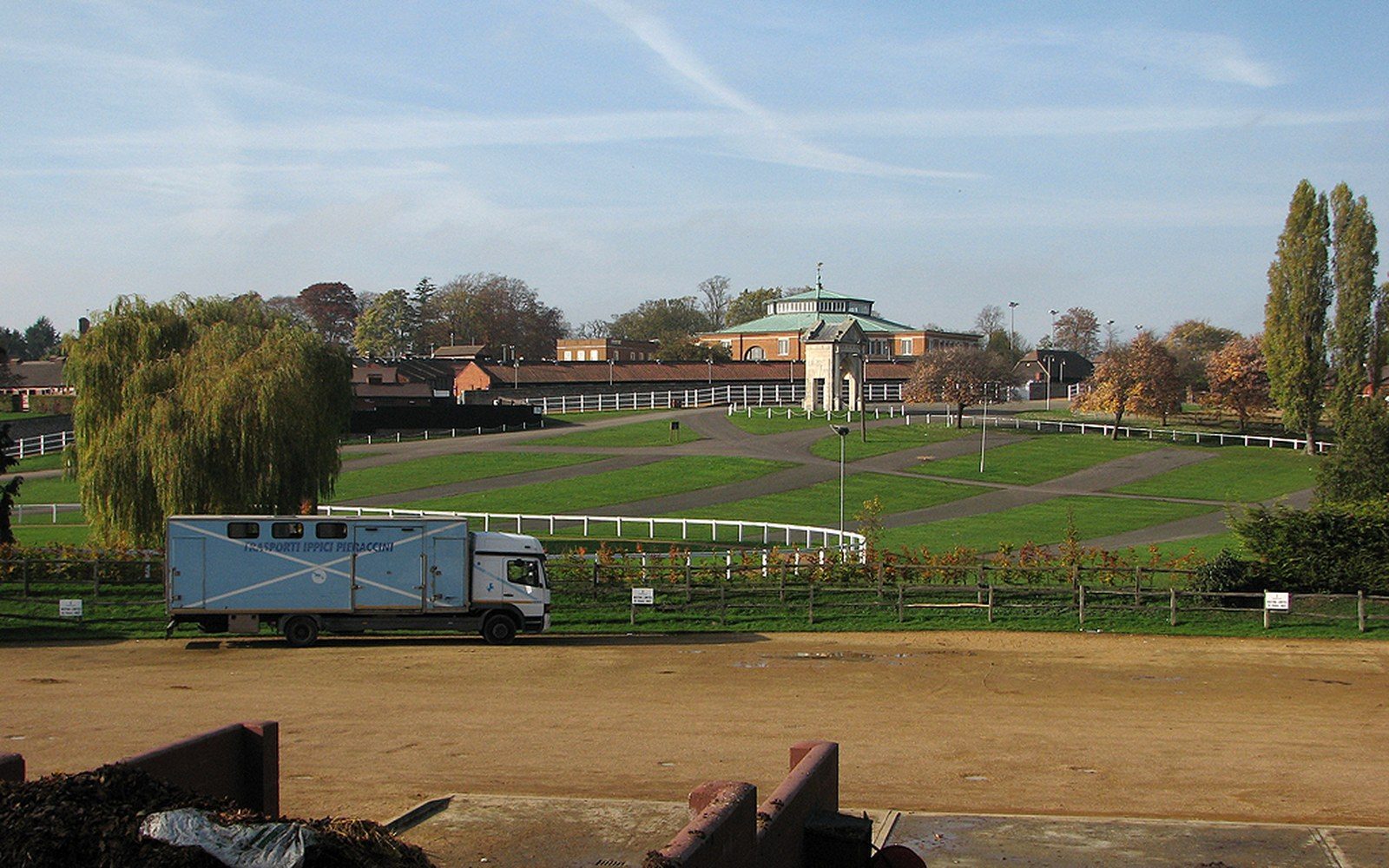
Every surface in the room is designed to make one thing happen: a lot passes from one owner to another in about two minutes.
What the room is for
The physical sale ring is a relatively recent container for a practice as old as organised horse keeping. Horses have changed hands at fairs, at roadsides, on racecourse rails and in open fields since before any permanent auction infrastructure existed. What the ring did was formalise and concentrate that exchange — give it a roof, a floor, a fixed address and a legal procedure that binds seller and buyer the moment the hammer falls. The room exists to make the procedure legible, repeatable and, crucially, witnessed.
Tattersalls at Newmarket is the oldest continuously operating bloodstock auction house in the world, founded in London in 1766 by Richard Tattersall and relocated to Newmarket across the twentieth century. Its physical ring is not incidental to its authority: the building confers gravity on the proceeding, and its name alone has become a word — tattersalls — that entered general English as a synonym for a horse market. When people speak of the ring as an institution, this is the model they have in mind, even if what they are describing is a provincial sale in a much plainer building.
The room's layout is governed by one practical requirement: every person who needs to see the animal must be able to see it simultaneously, and the auctioneer must be able to see every person. That produces a consistent architecture across sale centres worldwide — a walking ring or parade ring at floor level, banked or raked seating above it, the rostrum elevated on one side so the auctioneer commands the whole oval. Viewing angles are deliberately managed. The horse moves continuously so that no quarter is hidden and no defect can be concealed by holding the animal still.
The procedure, and why its formality matters
A sale under the hammer is not a casual transaction. It is governed by conditions of sale — a formal legal document, published in the catalogue and read as binding on every person who enters the ring enclosure. Those conditions specify what the seller warrants about the animal, what information must be disclosed, what veterinary certificates if any accompany the lot, and what recourse if any the buyer has after the fall of the hammer. Tattersalls publishes its conditions of sale openly, and their language is precise in ways that reward careful reading: the standard form covers everything from title to defects in identification documents to the treatment of a passed lot. The conditions of sale are not boilerplate — they are the institution's constitution.
The auctioneer's role is correspondingly not decorative. The person on the rostrum is reading a room in real time: tracking bids from the floor, from telephone buyers and from online platforms, managing the cadence of the ascent toward the reserve, and deciding — in seconds — whether to accept a bid, advance an increment or drop the lot without hitting its reserve. The reserve itself is set before the sale, agreed between vendor and auctioneer, and is not disclosed. It represents the lowest price the seller will accept; below it, the lot is withdrawn unsold rather than knocked down. The gap between reserve and whatever the room is willing to offer produces the unsold lot, a documented constant in every sale's published statistics.
Ring procedure moves quickly by design. A lot that lingers makes the room restless, and a restless room bids less. Two minutes is a working average for a thoroughbred yearling at a major sale; commercial pony sales move faster. The brevity is not casualness — it is the product of a preparation that happens entirely outside the ring. Buyers who intend to bid have already inspected the animal, read the catalogue entry, taken veterinary advice if they want it, and formed a view. The ring is not where due diligence happens; it is where a price is discovered for due diligence already done.
The institutions that maintain it
A sale ring derives its authority from the organisation behind it and the rules that organisation publishes and enforces. In British bloodstock, Tattersalls operates under rules that have been revised and codified across more than two centuries; the company is also closely tied to the administrative life of racing at Newmarket, where the National Stud and the Jockey Club are near neighbours. That proximity is not accidental. The bloodstock market and the racing establishment developed in the same place, at the same time, for the same purposes: to produce and transfer ownership of animals whose value was measured on the track.
What gives a ring genuine institutional weight is not the building but the studbook behind it. A thoroughbred sold at Tattersalls carries a pedigree that has been verified by Weatherbys, the private company that has maintained the General Stud Book since 1791. That record — every foal registered, every mating recorded — is what makes the catalogue entry a legal claim rather than a seller's assertion. The ring itself takes no position on a horse's quality; the studbook takes a very firm position on its identity and descent. Strip out the registry and the ring is selling an undocumented animal; strip out the ring and the registry is a ledger with no market attached. They are mutually dependent.
Other breeds have analogous arrangements. Warmblood sales in Germany, Iberian horse sales in Portugal and Spain, Welsh and native-breed sales across Britain — all operate through rings whose authority traces back to a studbook and a governing body. The procedure is the same; the paperwork behind it differs by breed and jurisdiction.
The ring and the animal
Horses pass through the ring without understanding what is happening to them in any administrative sense, but they are not passive. The ring is a strange environment by any prey animal's standards: enclosed, loud, populated by strangers, floored in unfamiliar material, lit in ways that flatten depth. A horse's vision — monocular on each side, with limited binocular depth — means the animal is processing a wide, bright, unpredictable scene, often with handlers working hard to keep it moving calmly at the walk. Sale preparation typically involves habituating a young horse to exactly this kind of exposure, because an animal that plants, rears or bolts in the ring is one that the room cannot properly assess.
What the room sees in those two minutes — the horse's walk, its way of going, its bearing under pressure — is information. Not sufficient information for a purchase decision on its own, but genuine information nonetheless. A horse that enters the ring calmly and moves freely presents itself in a way that a frightened or poorly handled animal cannot. The ring, for all its administrative machinery, is still a room built around the fact of an animal.
The procedure will outlast every building it currently occupies. It has already outlasted many.
Read next
- What a catalogue entry actually statesPedigree, conditions of sale and warranties are a formal document, and the omissions are as informative as the entries.
- The fall of the hammerTitle, risk and the conditions of sale all change at one instant, which is why the procedure is so exact.
- What does not sellUnsold lots are a documented part of every sale, and the reserve is why.