The Standing Constraint
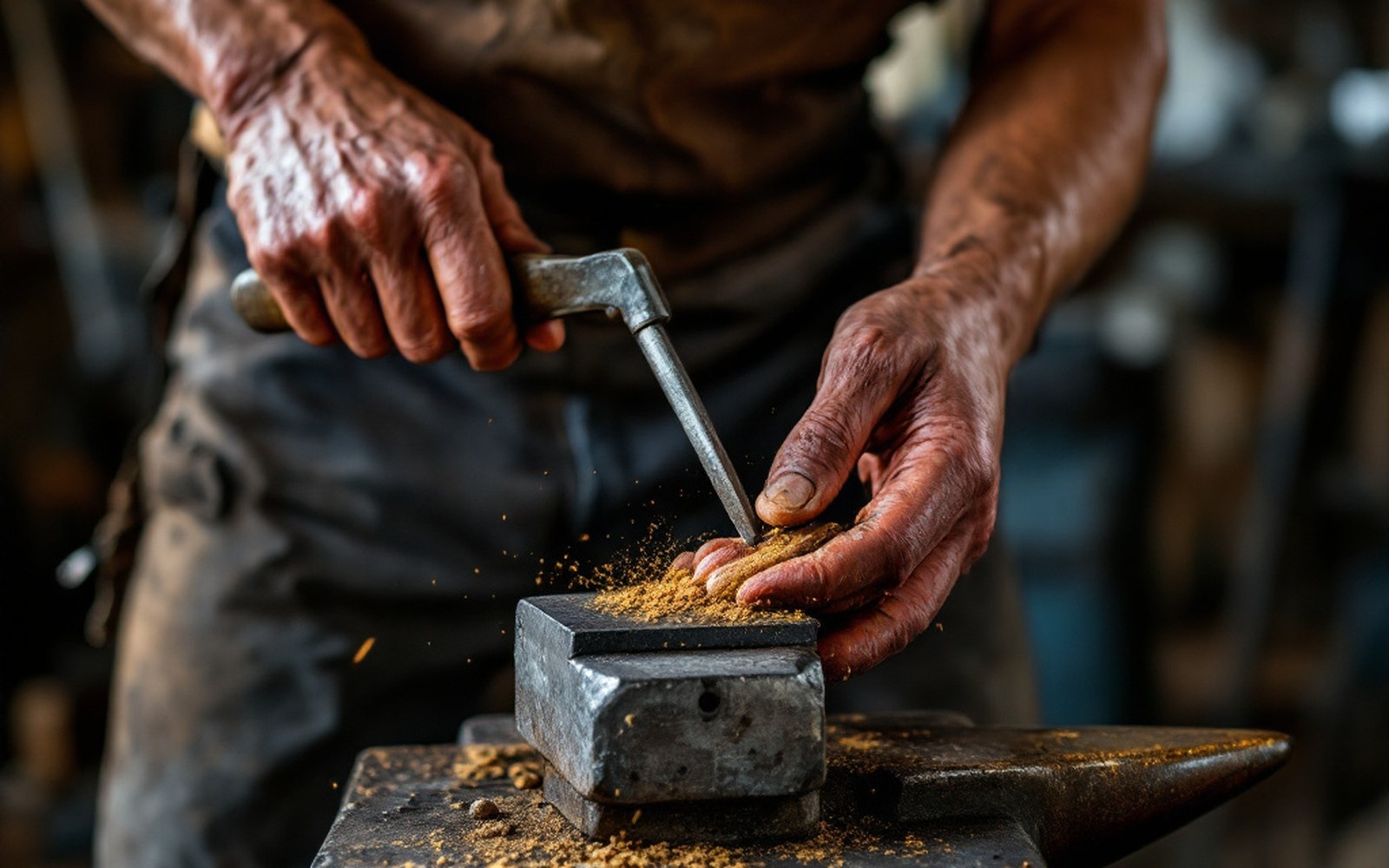
A domesticated horse on hard ground wears horn faster than it grows, which is the entire reason for shoeing.
Why horn cannot keep pace with hard ground
A horse's hoof is not bone. It is horn — a structure of keratinised tubules grown continuously downward from the coronary band, the ring of tissue that encircles the top of the hoof capsule like a crown. The wall grows at roughly six to ten millimetres a month, though the rate varies by season, nutrition and individual animal. The toe grows faster than the heel; the forefeet grow faster than the hinds. The hoof is, in this sense, a living output: the coronary band produces it constantly, the ground wears it away, and in the wild, those two forces reach an approximate balance.
That balance depends entirely on the surface. Feral horses on arid, rocky terrain — the mustangs of the American West, the Asiatic wild horse in its native steppe, the Namib Desert horse of southern Africa — wear their hooves against abrasive ground across distances that can reach tens of kilometres a day. The horn is hard. The wall is thick. The shape the hoof assumes under natural wear is compact, with a tight heel and a slightly rolled toe: what farriers call a self-maintaining foot. Field observations of feral populations consistently show hooves well-suited to the landscape they are walked across daily.
A domesticated horse stands still for most of its life. It stands in a stall, in a paddock, on grass or sand or rubber matting. It is ridden or driven for a fraction of each day, often on surfaces that are neither abrasive enough to wear horn efficiently nor forgiving enough to spare the structures inside. The arithmetic breaks down in two distinct ways. On soft or yielding ground, not enough horn is removed: the wall grows long, the toe flares forward, the heels contract inward, the whole capsule distorts. The break-over point — the spot on the toe over which the hoof pivots at the end of each stride — migrates forward, altering the lever arm that loads the deep digital flexor tendon and the navicular bone behind it. The internal architecture suffers from what external neglect imposes. On hard paved or compacted ground, the opposite problem dominates: abrasion exceeds growth. The wall thins, the sole loses its protective depth, and what began as a horn structure becomes a diminishing one.
The hoof under load
The hoof capsule is not a rigid box. Under the horse's weight — six hundred kilograms, concentrated at four points, in motion — it flexes. The heels spread laterally, the sole flattens slightly, and a network of interdigitating laminae, the sensitive laminae inside and the insensitive laminae of the wall, bear the load collectively. This lamellar connection is what holds the pedal bone suspended within the capsule; it is also what fails catastrophically in laminitis, when the bond between the two layers breaks down. The hoof's capacity to absorb concussion through this controlled deformation depends on the wall having adequate thickness and the heel having adequate height.
Hard surfaces challenge this engineering in a direct, mechanical way. Concussion at each footfall travels upward through a hoof that has no resilient ground surface to meet it partway. On natural, yielding terrain, the ground itself absorbs part of the force; on road metal or packed yard surface, none does. The digital cushion, the fibro-fatty pad above the frog, and the lateral cartilages — the ungular cartilages that extend back from the pedal bone — act as shock-absorbing structures, but their capacity is finite. They work alongside the horn, not instead of it.
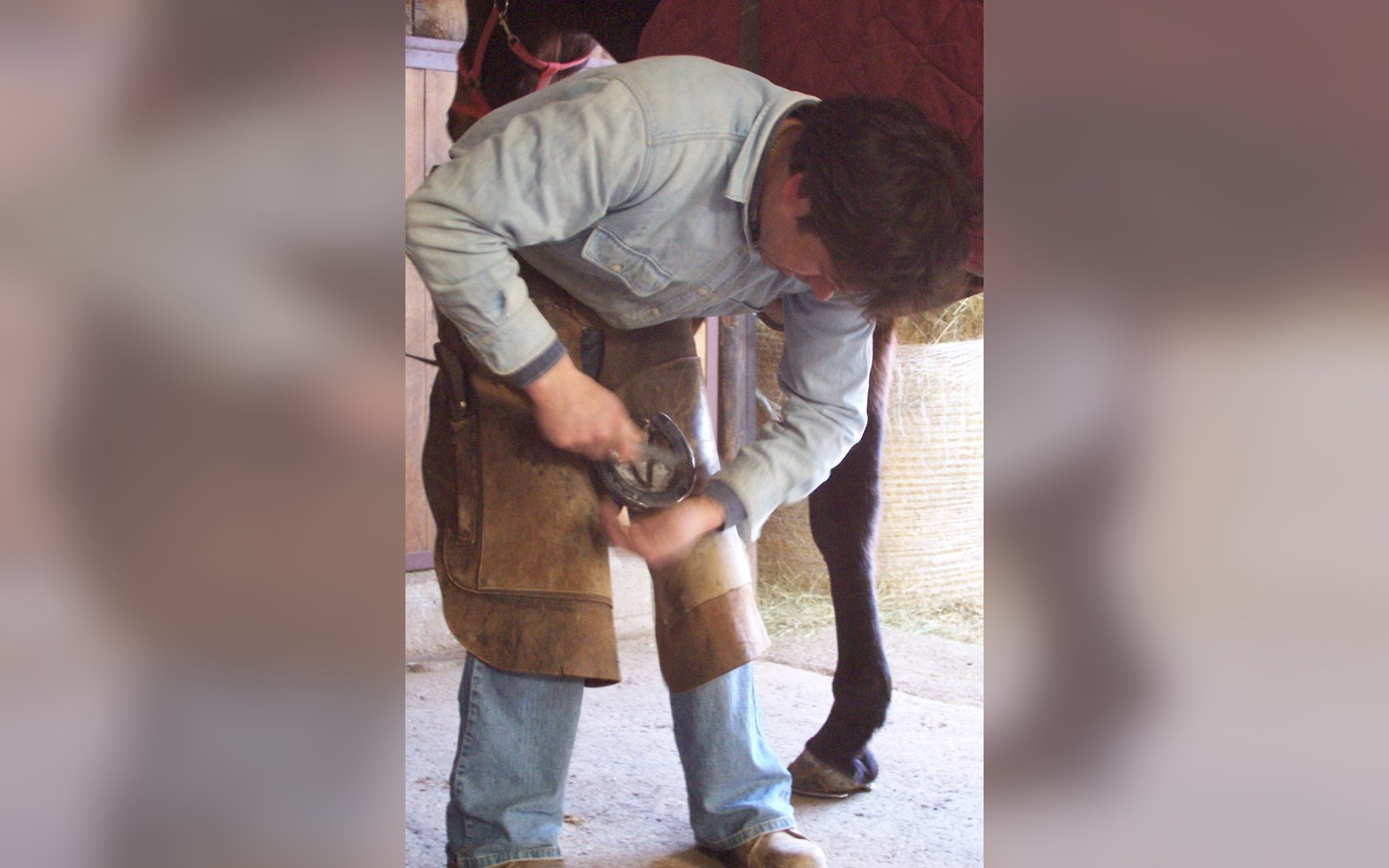
Iron shoes emerged as the practical answer to hard-surface wear long before any of this anatomy was understood. The earliest physical evidence for nailed horseshoes appears in early medieval Europe; hipposandals, slip-on iron devices found at Roman sites, predate them but were probably not nailed. The nailed shoe works because it relocates the wear surface: the shoe contacts the road, and the horn does not. Growth and abrasion are decoupled. The hoof continues to grow on its six-to-ten-millimetre schedule, the shoe takes the mechanical punishment, and the farrier resets the system at intervals of roughly six to eight weeks — the cycle that growth rate makes necessary rather than one that tradition arbitrarily established.
What the shoe does and what it cannot
A shoe is not merely a wear surface. Its weight, width, toe position, heel length and presence or absence of caulkins or pads all alter the mechanics of every stride. A bar shoe closes the back of the shoe across the heels, changing load distribution. A rolled toe moves the break-over point back, shortening the lever arm and reducing tendon load on each stride. An egg-bar shoe extends support behind the hoof. These are mechanical choices, each with anatomical consequences, and the farrier's education encompasses enough anatomy to make them deliberately rather than by convention.
The shoe cannot, however, solve the underlying constraint. A shod hoof still grows. It still distorts if the interval between resets grows too long. The toe elongates forward, the heel descends, the break-over creeps out. A horse whose shoes are left on for twelve weeks rather than six does not simply have a long hoof; it has an altered mechanical system. The dorsal wall angle changes relative to the pastern, and the forces transmitted through every landing redistribute accordingly. The shoe buys time. It does not buy an exit from the biology.
Barefoot advocates — and there is a coherent tradition of thought here, associated with practitioners who have studied feral hoof morphology — argue that the shoe also prevents the hoof from doing its own mechanical work. A rigid shoe nailed to the wall inhibits heel expansion. It reduces the proprioceptive loading of the frog and digital cushion, structures that, on yielding ground, would engage at every step. On hard modern surfaces, these arguments collide with the abrasion arithmetic. The horse that works daily on roads and yard surfaces without shoes will wear faster than it grows. That is not a philosophical position; it is a material rate and a biological rate, and the material rate wins.
This is the standing constraint: the domesticated horse cannot wear its horn against the ground at the rate a wild horse would, because it does not move against the same ground for the same distances. The hoof that evolved for the steppe or the mesa is now managed from a box stall, led across concrete, ridden on macadam. The coronary band knows nothing of this; it produces horn on its ancient schedule, indifferent to the life surrounding it. The farrier's trade exists because that schedule and the conditions of domestication do not coincide — and there is no closing the gap by intention or philosophy, only by intervening in it.
Read next
- Why the farrier's trade exists at allHot shoeing is metalwork and anatomy at once, and the apprenticeship is long for both reasons.
- The cycle, measured in weeksGrowth rate sets the interval, and the interval sets the yard's calendar.
 Built to see almost everything, except straight aheadMonocular vision on each side and a blind spot directly in front explain most of what gets read as temperament.