Founding Stock, and the Coefficient

Every closed registry carries the arithmetic of its origins: the smaller the founding population, the higher the coefficient climbs, and no amount of careful selection changes the underlying mathematics.
The Moment the Door Closes
A studbook is a closed registry before it is a breed. The administrative decision to stop admitting outside blood is, in retrospect, also a decision about mathematics — because from that moment forward, every animal registered descends from a finite pool, and every mating draws on the same limited reservoir of alleles. The founding population is fixed. Whatever variation it contained is all the variation the breed will ever have, barring mutation, which proceeds too slowly to matter on any timescale a registry secretary would recognise.
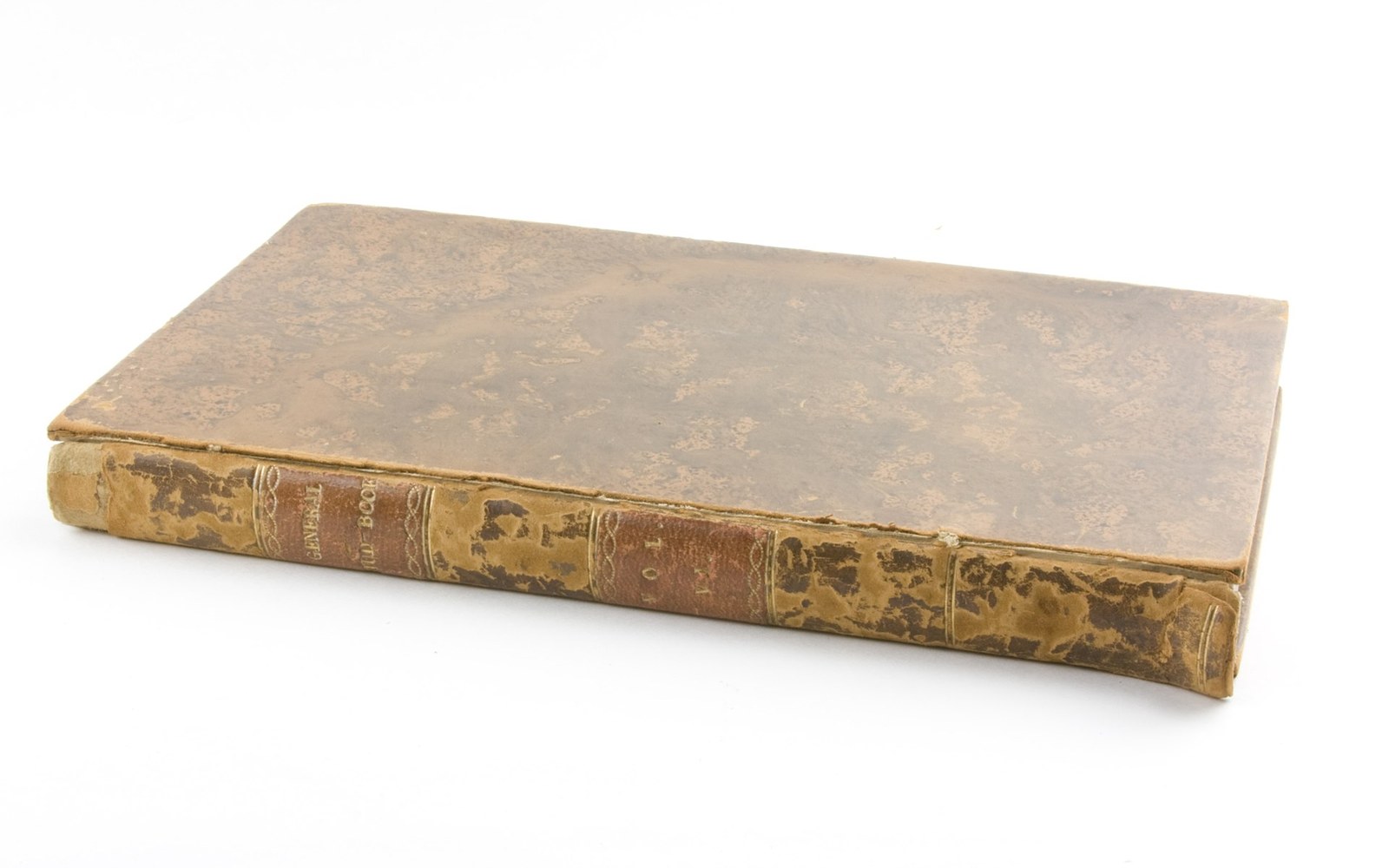
The Thoroughbred makes the point with unusual clarity. The breed traces in male line to three stallions — Byerley Turk, Darley Arabian and Godolphin Arabian — all imported to England in the late seventeenth and early eighteenth centuries, and all three are found in the pedigree of virtually every Thoroughbred alive. The foundation mares are more numerous, and therefore the dam lines more varied, but even so the General Stud Book has been closed to outside blood since 1791. More than two centuries of matings, all within the same closed circle, compound the inherited narrowness of the founding pool.
The coefficient that results from all this is not a judgment or a warning label. It is an arithmetic statement: the probability, expressed as a percentage, that any two alleles at a given locus in an individual animal are identical by descent — meaning they trace back to the same ancestor in the pedigree. A coefficient of zero would mean no shared ancestry at all, which is impossible in any closed population given enough generations. A coefficient of one hundred percent would mean total homozygosity, which is theoretical. Real populations sit somewhere between, and in long-closed registries they drift, slowly but reliably, upward.
How the Arithmetic Works
The calculation itself is not complicated in principle. Sewall Wright, the American geneticist who formalised it in the early twentieth century, derived a formula that traces every path through a pedigree by which an individual can inherit the same allele from both parents. Each path contributes a fraction determined by the number of transmission steps it contains. Sum all the paths, discount for the inbreeding of the common ancestors themselves, and the result is the inbreeding coefficient for that individual. The number is exact for any pedigree you have complete data for; it becomes an approximation the moment records run out, which in practice they always do several generations back.
This is why founding population size matters so disproportionately. A breed that closes its registry with five hundred mares and twenty stallions begins from a different position than one that closes it with fifty mares and three stallions, even if both registries have been kept meticulously ever since. The narrow base compounds faster. Each generation, the pool of ancestors shrinks in effective terms even if the actual headcount of registered animals grows — because growth in numbers does not create new alleles, it only recirculates existing ones through more individuals.
Effective population size, a concept closely related to Wright's coefficient, measures not the census count but the number of individuals who actually contribute genes to the next generation at something approaching equal rates. Heavy use of a small number of elite sires — a pattern the Thoroughbred demonstrates clearly, and the warmblood studbooks of continental Europe have replicated through their own approved-stallion systems — reduces effective population size well below the nominal headcount. A registry might list ten thousand active mares but if a handful of fashionable stallions cover a disproportionate share of them, the genetic arithmetic runs as if the population were far smaller.
What Registries Do With the Number
Some registries publish inbreeding coefficients as a matter of course; others calculate them internally for their own monitoring purposes; a few treat the question as peripheral. The approaches differ partly by tradition and partly by how much genomic data the registry has chosen to invest in. Pedigree-based coefficients, computed from recorded ancestry alone, are now supplemented in several major registries by genomic coefficients derived from actual DNA samples, which give a more precise picture because they measure observed identity rather than expected probability. The two numbers are not always the same — a pedigree can be accurate and still miss identity by descent through unknown common ancestors further back than the records reach.
Among warmblood registries, the Hanoverian Verband and its counterparts in other German states have monitored genetic diversity for decades, in part because the closed or semi-closed nature of their books and the intense selection pressure on approved stallions created a measurable narrowing of the gene pool during the second half of the twentieth century. Responses have included deliberate outcrossing policies — allowing, under defined conditions, the admission of stallions from approved sibling registries — which reopen a narrow aperture without fully abandoning the closed-registry principle.
The Thoroughbred case has attracted extensive genomic study precisely because the records are so complete and the breed so commercially significant. Research published in the past two decades has confirmed what the pedigree arithmetic suggested: the breed's genetic diversity is substantially reduced compared to other horse populations, the loss concentrated in the period since the General Stud Book closed. Identified bottlenecks correspond to the heavy use of particular sires during certain eras — the influence of Northern Dancer in the late twentieth century being the most documented instance. None of this diminishes the breed's athletic capacity, which is an expression of the very traits that intense selection was meant to fix; it is simply a description of the genetic landscape.

The Icelandic Horse — a breed whose ambling tölt is one of its defining characteristics and whose isolation on an island with no imports permitted since the tenth century makes it among the most inbred horse populations on earth — has been studied precisely because its long isolation offers something close to a natural experiment in what very low effective population size produces over many centuries. Icelandic registries now work with researchers to track coefficients and manage them through planned matings.
What the Number Cannot Do
A coefficient describes a pedigree. It says nothing about which specific alleles were passed along, nothing about whether the shared ancestry was in a line selected for soundness or speed or temperament, and nothing about the phenotype that will result. Two animals with identical coefficients may be very differently constituted; two full siblings will carry the same coefficient but different actual genomes. The number is a tool for managing population-level diversity over time, not a predictor of individual quality.
What it does, used honestly, is hold a registry accountable to its own founding decisions. Every closed book is a bet placed on a particular population at a particular moment. The coefficient is the record of that bet, compounding quietly with each generation that passes inside the gate.
Read next
- A studbook is a closed registry before it is a breedA breed is defined by an administrative decision to stop admitting outside stock, and everything else follows from that date.
- The passport and the chipIdentification is administrative infrastructure, and it is what makes a registry enforceable.
 Built to see almost everythingBuilt to see almost everything, except straight aheadMonocular vision on each side and a blind spot directly in front explain most of what gets read as temperament.