What a catalogue entry actually states

Pedigree, conditions of sale and warranties are a formal document, and the omissions are as informative as the entries.
The document before the horse enters the ring
A sale catalogue is a legal instrument dressed as a brochure. Every page of a Tattersalls catalogue, or those of any comparable house, carries entries that follow a prescribed form — lot number, name, sex, age, colour, sire, dam, the dam's produce record, and the first several generations of the pedigree laid out in the standard branching grid. Before the bidding opens, that entry is the only official version of what the lot is. It is also a document whose silences can matter as much as its text.
The entry opens with the horse's registered name as it appears in the relevant studbook, followed by the year of foaling, sex and colour. Colour here is a formal classification — bay, chestnut, grey, roan, brown, black — not a description of the individual animal standing in the yard. A horse registered as bay may range from a pale copper animal to something that looks nearly black in winter coat; the catalogue word carries the registry's designation, and a reader should know the difference. Year of foaling follows the same logic: it is the calendar year, so a horse described as a three-year-old in the catalogue of a July sale will have been foaled in a specific calendar year, and the reader is expected to do the arithmetic against the sale date.
Pedigree: the grid and what it contains
The pedigree grid occupies most of the space on the page. A standard five-cross grid runs to thirty-two ancestors in the fifth generation, though catalogues commonly print three or four crosses, expanding on request or in supplementary sheets for horses with notable lineage. The entries in the grid are the registered names exactly as they appear in the General Stud Book — no nicknames, no common abbreviations. A reader who does not recognise a name should look it up in the relevant registry volume rather than assume the animal is obscure; some of the most commercially potent lines carry names that mean nothing to a casual observer.
Beneath the horse's own entry sits the dam's produce record: a column listing every previous foal the dam has produced, with the year of foaling, sex, colour and — critically — whether each animal is a winner. This column is one of the more honestly informative sections of the page, because it is essentially raw data. A dam with eight foals and seven winners states one thing; a dam with eight foals and no winners states another. The distinction matters because the pedigree grid shows what blood has been assembled; the produce record shows what that assembly has so far yielded. Neither figure predicts the individual lot, but together they describe the population from which it comes.
Inbreeding, where it is present, is rarely declared in the catalogue entry itself. A horse described simply by its pedigree grid may be moderately or heavily inbred to a particular ancestor — inbreeding coefficients, where they are published at all, appear in registry documents and research contexts rather than sale pages. A reader who wants to know whether, say, the sire and the dam's sire are the same individual — a pattern that appears occasionally in Thoroughbred pedigrees — needs to trace the grid by hand or use a pedigree database.
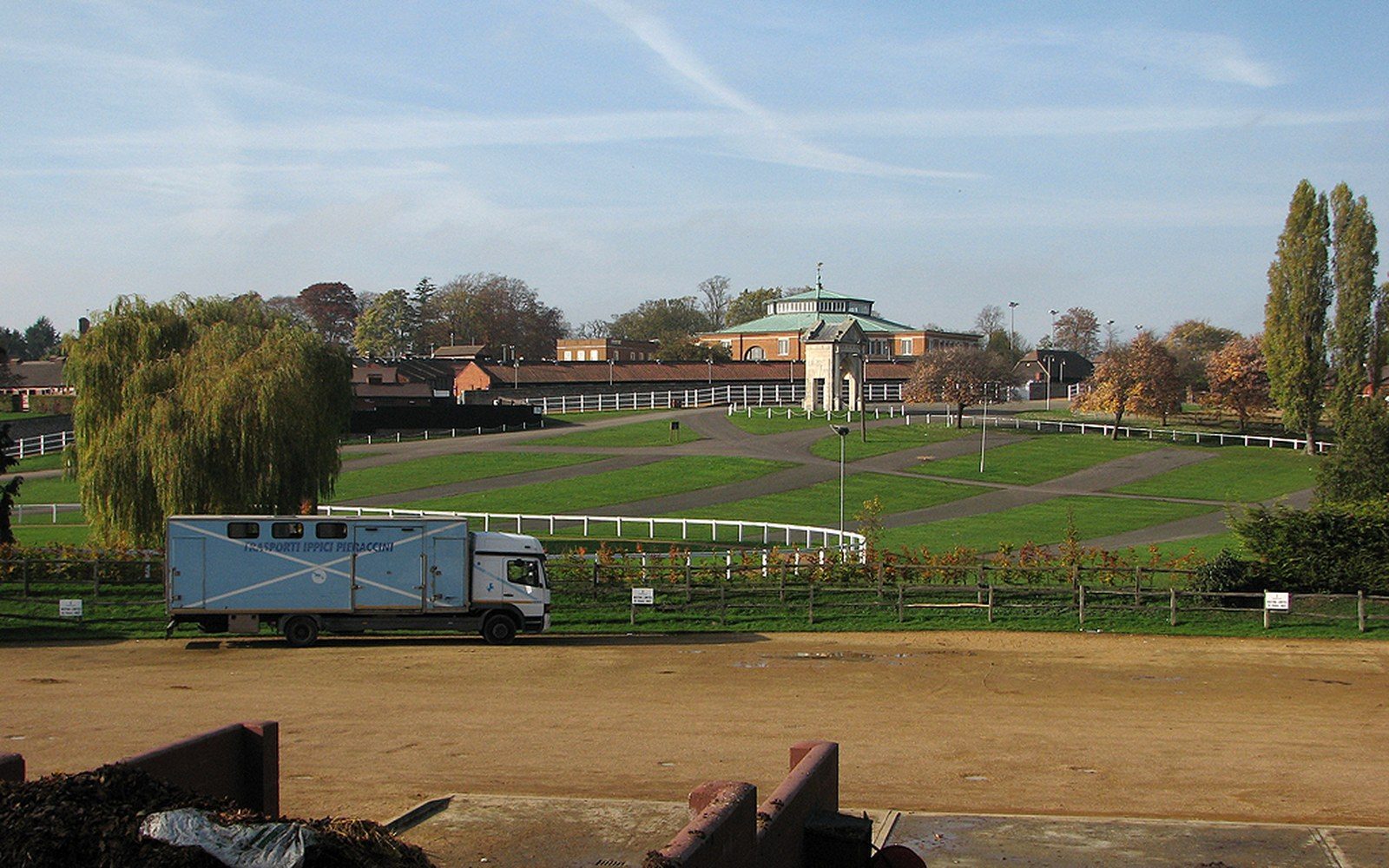
The entry may include a note on the sire's stud fee or covering statistics if the horse is a newly standing stallion, and it will identify the National Stud or private stud at which the horse was bred, sometimes with the breeder's name. These details are informational rather than warranted; the catalogue does not represent that a breeder's reputation attaches legally to the lot.
Conditions of sale: the legal layer
Beneath the colour and pedigree lies the part of the catalogue that most readers skip and that matters most in any dispute: the conditions of sale. These appear either at the front of the catalogue volume — Tattersalls prints them in full — or as a separate document incorporated by reference. They govern everything that happens between the fall of the hammer and the moment the horse leaves the yard: payment terms, the transfer of risk, the period within which a purchaser may raise a complaint, and the precise warranties the vendor is held to have given.
A standard set of conditions warrants only that the horse is as described in the catalogue entry itself — that the name, age, sex and pedigree match the registration documents. They do not warrant soundness, temperament, athletic potential or anything else that a purchaser might assume is implied by a high price. The horse is sold as a horse, not as a future racehorse or breeding animal, unless a specific warranty to that effect has been negotiated and appears in writing as an addition to the standard terms. This is the core of what the document says: the catalogue entry describes an animal, the conditions of sale define the extent of that description, and the rest is at the buyer's risk.

One clause that appears in almost all major-house conditions is the veterinary examination clause, which sets out the time window — often measured in hours after the fall of the hammer — within which a purchaser may submit the animal to a vet's inspection and, on specific grounds, reject it. The grounds are narrowly defined: they typically cover only those conditions that would be disclosed by a standard examination and that pre-existed the sale. A condition that develops after the hammer falls does not engage this clause. The practical consequence is that what happens in the ring happens very quickly, and the legal position crystallises at the moment of the auctioneer's acknowledgement.
The conditions also define what a reserve means in legal terms. A reserve is a minimum price set by the vendor below which the auctioneer is not authorised to sell; it does not appear in the catalogue entry and is not disclosed to bidders. Where bidding fails to reach the reserve, the lot is withdrawn, and the catalogue entry — precise as it is — has produced no sale. The entry makes no reference to this mechanism; the conditions of sale are where it lives.
What the omissions say
A catalogue entry says nothing about why a horse is in the sale. A vendor's dispersal, a death in the owning family, a horse that disappointed on the track, a surplus animal from a large operation — all of these produce identical entries on the page. The entry describes; it does not explain. This is not evasion. The omission is structural: the catalogue entry is a registry document, and registries record facts, not motivations.
Equally absent is any reference to the horse's schooling, handling history or stable manners. These bear on what it is to be near the animal, and a reader who wants to understand that dimension is pointed toward the phrase "flight distance" — the margin at which a prey animal registers a threat and responds to it — which describes something real about the species but appears nowhere in any catalogue. The entry addresses the animal's lineage and identity; the yard is where everything else is observed.
What the catalogue entry actually states, then, is a formal and bounded thing: registration facts, bloodlines, the dam's history of production, and the legal terms under which title will pass. That is a considerable amount of information, correctly read. What it does not state is at least as much.
Read next
- The ring, as an institutionA sale ring is a room built for a specific procedure, and the procedure is older than any of the buildings.
- The fall of the hammerTitle, risk and the conditions of sale all change at one instant, which is why the procedure is so exact.
- What does not sellUnsold lots are a documented part of every sale, and the reserve is why.